Ask three providers for a website quote and you can easily get three very different numbers. That's not because two of them are wrong. It's because "a website" can mean anything from a template with your logo on it to a custom-built platform with bookings, payments and automations.
Here's what actually drives the cost, so you can budget sensibly and compare quotes fairly.
What you're paying for
A website project usually includes some or all of these:
- Strategy and planning: goals, audience, page structure and the user journey
- Design: the look and layout of each page, for desktop and mobile
- Content: writing, photography, video and illustrations
- Development: building the site so it works, fast, on every device
- Functionality: forms, bookings, e-commerce, memberships, search, multilingual content
- Integrations: CRM, email marketing, payment, accounting, analytics
- SEO set-up: structure, metadata, sitemaps, redirects from the old site
- Testing and launch: browsers, devices, speed, accessibility
- Training and handover: so you can update it yourself
When one quote is much cheaper, check which of these it leaves out.
The biggest cost drivers
1. Template or custom design
A customised template is faster and cheaper. A custom design is built around your brand and your customers, and stands out more. Many projects sit in between: a custom design system applied to a sensible set of page layouts.
2. Number of unique page designs
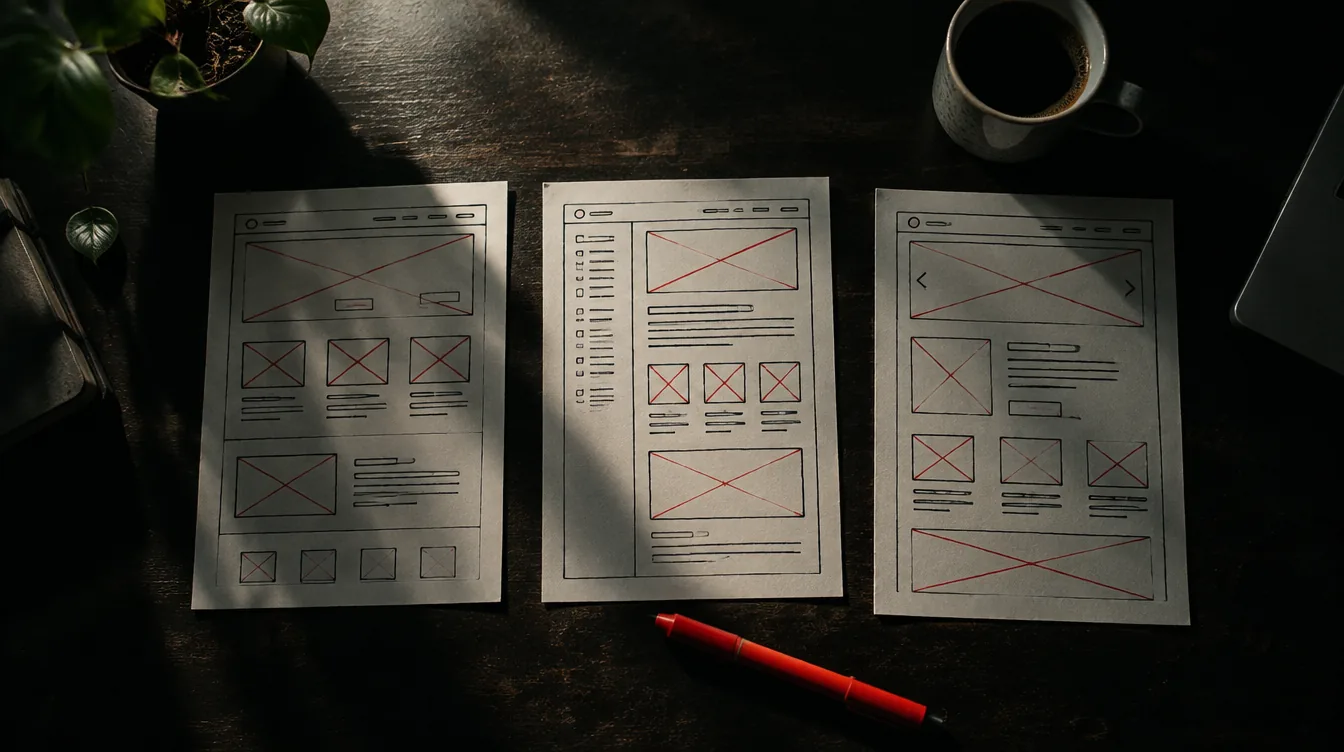
Ten pages that share two layouts cost far less than ten pages that are each designed from scratch. Count unique layouts, not pages.
3. Content
Content is the most underestimated cost. If you supply finished text and photos, the project is simpler. If you need copywriting, a photoshoot or video, budget for it separately.
4. Functionality
Each feature adds design, building and testing time. Online booking, a shop with hundreds of products, member areas, calculators or several languages can each be a significant part of the budget.
5. Integrations and automation
Connecting your site to a CRM, email platform, booking system or payment provider saves you time every day after launch, but each connection needs setting up and testing.
6. Migration
Moving an existing site means mapping old pages to new ones, redirecting old links so you keep your search rankings, and moving content across.
7. Timeline
A rushed deadline usually means more people working in parallel, which costs more.
Running costs people forget
A website isn't a one-off purchase. Plan for:
- Domain name: yearly
- Hosting: monthly or yearly, depending on traffic and needs
- Licences: premium plugins, fonts, themes, booking or e-commerce platforms
- Maintenance: security updates, backups and fixes
- Improvements: new pages, landing pages, content and features as the business grows
A good provider will list these clearly in the proposal.
How to budget
- Start from the goal. What should the site achieve in its first year: more enquiries, online sales, fewer admin hours? Put a rough value on that.
- Decide what's essential for launch, and what can come in a second phase. Launching a strong core site sooner is often smarter than waiting for everything.
- Keep a reserve of around 10 to 20% for content surprises and small additions.
- Plan the yearly running costs alongside the build.
How to get quotes you can compare
Send every provider the same short brief:
- What the business does and who the site is for
- The main goal of the site
- The pages and features you need, as a list
- Who will provide text, photos and video
- Integrations: CRM, email, booking, payments
- Your timeline and budget range
- Examples of sites you like, and why
Then compare what each quote includes, not just the total. Ask what happens after launch, who owns the site and the domain, and how changes are charged.
Cheapest isn't the same as best value
A site that's cheap to build but slow, hard to update and doesn't convert costs more over time than one built properly. The right question isn't "what's the lowest price?" but "what will this site return, and what will it cost to run?"
Every project we take on gets a fixed quote after a discovery call. If you'd like one, book a free 30-minute call.